The Fathom: How the Reach of a Sailor's Arms Measured the Abyss
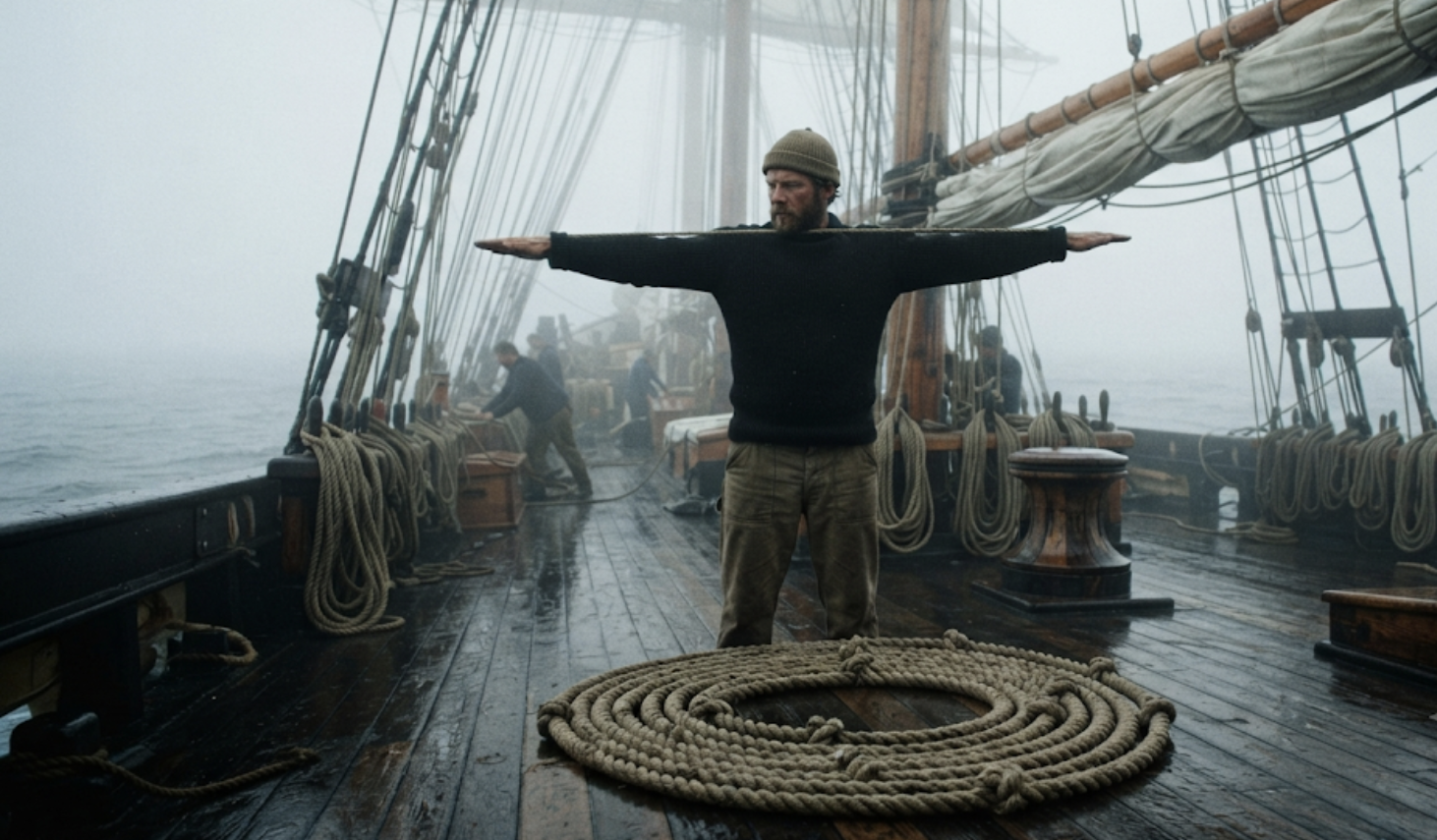
To "fathom" a concept means to deeply understand it. But long before it became a psychological metaphor, the Fathom was a matter of life and death. It belonged entirely to the rough-handed sailors of the Royal Navy and the merchant fleets, serving as the definitive unit for measuring the terrifying, unseen depth beneath a ship's wooden hull.
The Literal Human Embrace
The word fathom comes from the Old English fæðm, which means "outstretched arms" or "an embrace." For thousands of years, the easiest way for a sailor to measure a piece of rope was to pull it out hand-over-hand from the centre of their chest. The average distance from the fingertips of one outstretched arm to the fingertips of the other on a grown man is roughly 6 feet.
Heaving the Lead
In the Victorian era, as massive iron steamships navigated shallow coastal waters, knowing the depth was critical. Ships employed a leadsman, who threw a heavy lead weight attached to a rope (the "lead line") into the water. As the line sank, the leadsman pulled it back up hand-over-hand, counting the fathoms. To ensure readability in the dark or in freezing rain, sailors used specific markers:
- 2 Fathoms: Leather with two strips ("mark twain")
- 3 Fathoms: Leather with three strips
- 5 Fathoms: White calico
- 7 Fathoms: Red bunting
- 10 Fathoms: Leather with a hole punched through it
- 13 Fathoms: Blue serge
The Literary Connection: Mark Twain
The fathom is directly responsible for one of literature's most famous pseudonyms. A young riverboat pilot named Samuel Clemens navigated the Mississippi, where the leadsman's cry of "By the mark, twain!" signalled the water was exactly two fathoms deep (12 feet)—the minimum safe depth for a steamboat. Clemens eventually adopted the phrase as his pen name: Mark Twain.
Victorian Fun Fact: While modern nautical charts officially transitioned to metric metres in the 1970s, the fathom remains a deeply ingrained part of maritime history and culture, representing a time when depth was measured by the human body rather than electronic sonar.
With the advent of electronic sonar and acoustic echo-sounders in the 20th century, the manual lead line became obsolete. However, for many mariners and historical enthusiasts, the fathom remains the primary way to visualise the scale of the sea.