The Medieval Loaf Law: Why Your Great-Great-Great-Grandparents Would Have Rioted Over Shrinkflation
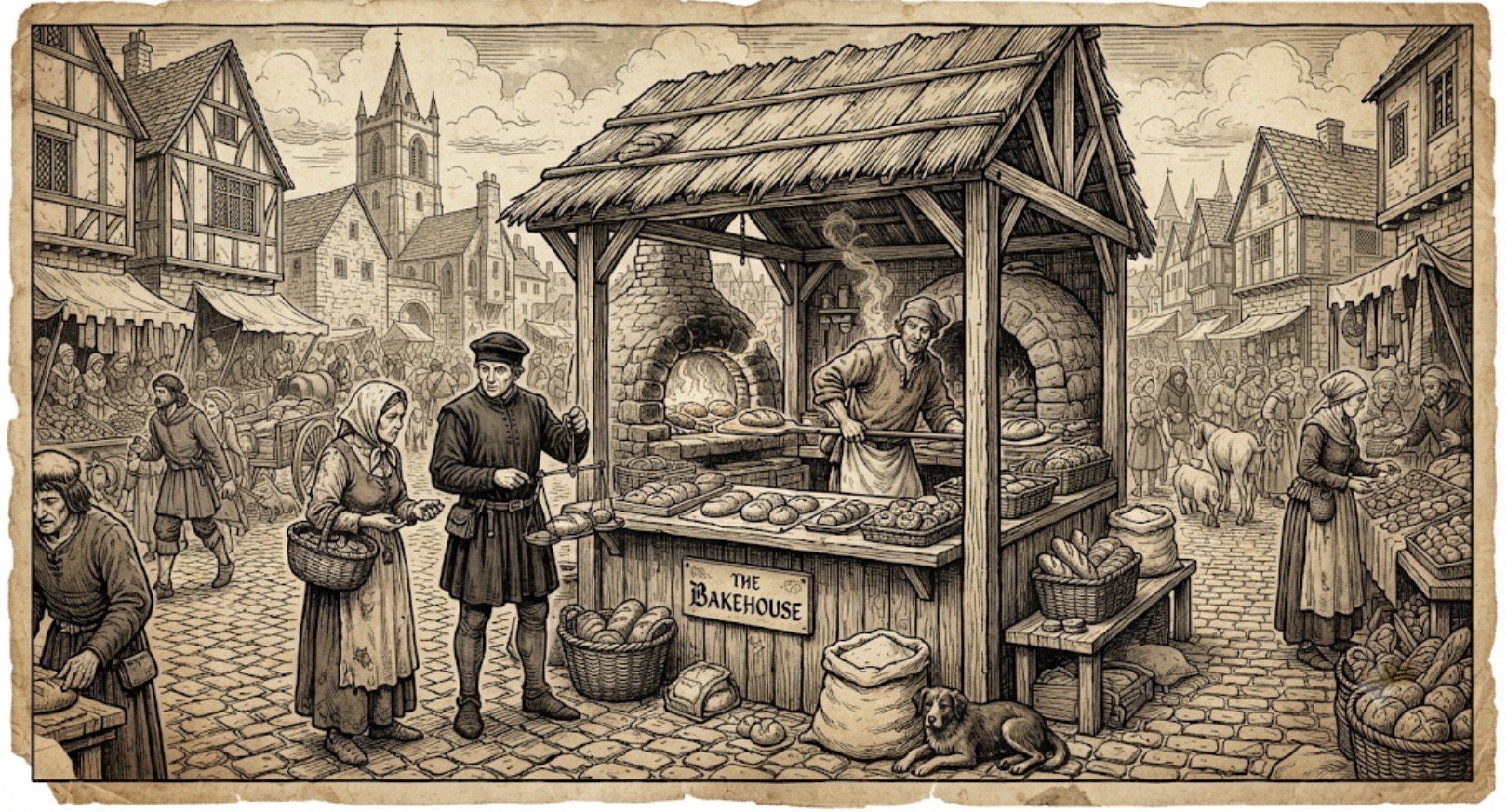
Imagine walking into your local bakery, buying a loaf of bread, and realising on the walk home that it looks a little lighter than usual. Annoying, right? Now imagine that instead of just leaving a grumpy Google review, the town magistrate drags the baker straight to the town square, locks them in the pillory, and smashes their baking oven to pieces.
Welcome to thirteenth-century England, where buying a loaf of bread was basically an extreme sport.
Long before modern consumer watchdogs or government regulators existed, the Crown introduced one of the wildest market laws in history: The Assize of Bread and Ale. Codified way back in 1266, this royal decree completely took control of the daily staple of life, tying the price and weight of every single loaf directly to the messy reality of wheat harvests.
If you want a great conversation starter at your next dinner party about how little humanity has actually changed, look no further than the medieval bread police.
The Ultimate Medieval Life Hack (That Was Actually a Nightmare)
Here’s the deal: bread was absolute king back then. For the average person, it made up practically the entire daily diet. If a drought hit or a bad harvest wiped out the fields, wheat prices would skyrocket. Naturally, dishonest bakers had a huge temptation: either charge the same price for a tiny loaf, or pad the dough out with cheaper fillers like ground beans, acorns, or worse.
To keep people from rioting in the streets, the government stepped in with a brilliant (and slightly unhinged) solution. They legally locked the price of bread.
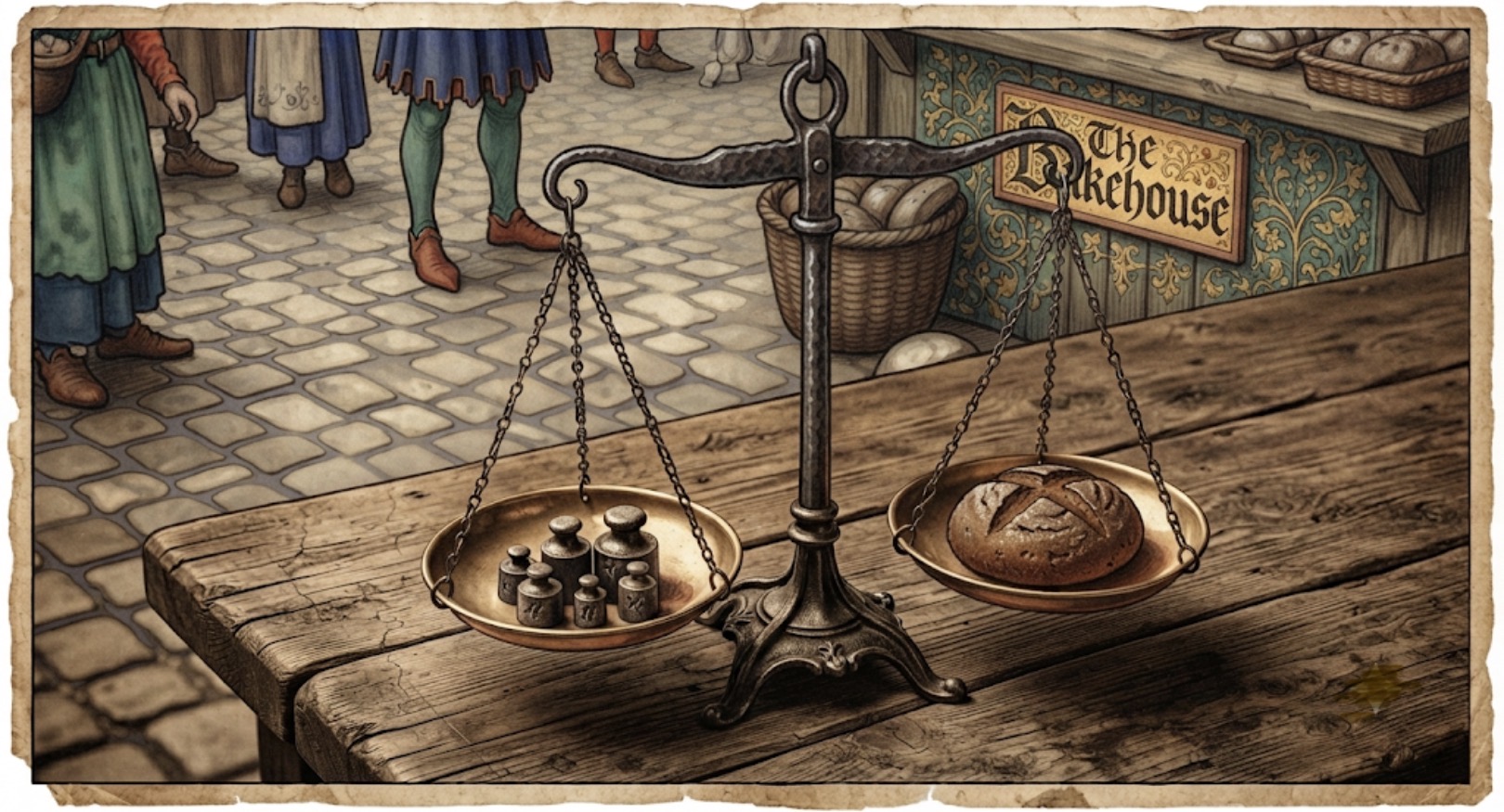
A standard penny loaf stayed the exact same price no matter what. But to keep bakers from going bankrupt when grain prices spiked, they invented a sliding scale for weight. When wheat got expensive, the official royal tables dictated that the loaf had to physically shrink. When wheat was cheap, the loaves grew.
Enter: The Real Origin of the "Baker’s Dozen"
Operating under these tight royal rules meant bakers were sweating bullets. If an official inspector (known delightfully as a Clerk of the Market) showed up, weighed your bread, and found it a fraction of an ounce too light, you were facing brutal fines or public humiliation.
To save their skins, bakers started a genius loophole. When selling a wholesale bundle of 12 loaves to local retailers, they would quietly throw in a 13th loaf for free. That way, if a random loaf in the batch came up short, the overall average stayed legal, keeping the angry inspectors off their backs. Boom—the baker’s dozen was born out of pure legal panic.
Historical Note:Curious how those ancient quantities stack up? You can play around with the historical maths yourself over on the Assize of Bread Converter!
Wait... This Sounds Way Too Familiar
If any of this is giving you major déjà vu, it’s because we are living through the exact same thing today.
The Original Shrinkflation: When modern food companies face inflation and rising supply chain costs, they don't always raise the sticker price on your favourite cereal or chocolate bar. Instead, they quietly shrink the package from 500 grams to 450 grams and hope you won't notice. Medieval bakers didn't invent shrinkflation—they literally had it legally codified into royal law.
Government Price Caps: Trying to control prices by royal decree always causes headaches. Back then, if the king set the profit margins too tight, bakers just quit or set up black markets for illegal bread. It’s the exact same debate we have today whenever governments talk about rent control or caps on everyday goods.
Conclusion
History is at its best when it reminds us that humans thousands of years ago were dealing with the exact same everyday annoyances we are over a pint at the pub today—complaining about the cost of living, trying to dodge sneaky corporate tricks, and looking for a fair deal.
The next time you grab a loaf of sourdough from the local shop and think it feels a bit light for the price, just be glad you don't have to worry about the town clerk checking your crust with a royal scale!