The Mile: How One Thousand Roman Paces Conquered the British Map
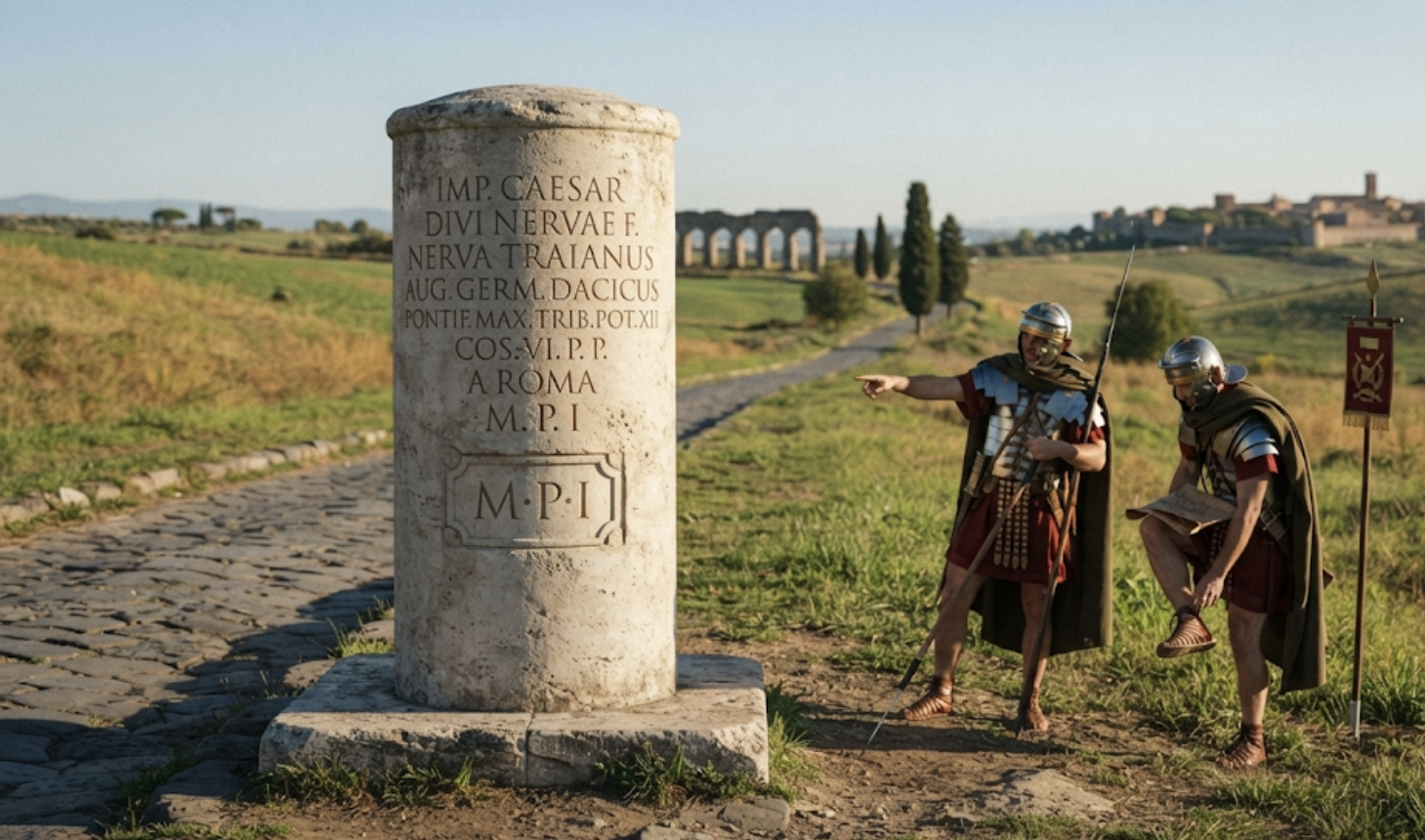
The Mile is arguably the most stubborn survivor of the Imperial system. While modern Europe embraced the metric kilometre, Great Britain and North America held fast to the mile. It governs our speed limits, our highway signs, and our marathons. Yet, the story of how this unit arrived on British soil is an epic tale of military conquest and royal intervention.
The March of the Caesars
The word "mile" comes from the Latin mille passus, literally translating to one thousand paces. To Roman legions building roads across ancient Britannia, a "pace" (passus) was not a single step—it was the distance covered from the heel of one foot striking the ground to the next time that same heel struck the ground (a double step). Roman surveyors marched with mechanical odometers attached to chariot wheels, dropping a small stone into a box every 1,000 paces to mark where the next stone milestone should be chiselled.
The Great Queen's Intervention
After the Romans departed, the mile mutated across different regions, with varying lengths used in Ireland, Scotland, and English farming districts. By the Tudor era, the English mile had grown to roughly 5,000 London feet, creating significant confusion. To end the mathematical headache, Queen Elizabeth I passed a royal statute in 1593 that forever changed the geography of Britain.
Victorian Fun Fact: Queen Elizabeth I legally defined the statute mile as exactly 8 furlongs. Because a furlong was 660 feet, multiplying it by 8 gave the mile its famously quirky modern length: 5,280 feet (or 1,760 yards). This clever compromise finally allowed town merchants and rural farmers to use the same maps.
The Modern Survivor
When the Victorians codified the Weights and Measures Act of 1824, Elizabeth's 5,280-foot mile was cemented as the global standard for the British Empire. It was so deeply embedded in the layout of the world's first global railway network that removing it proved nearly impossible, ensuring its survival as a cultural powerhouse to this day.