From Barleycorns to Buses: Nature’s Absurd Influence on How We Measure
If you have ever felt that the modern world is obsessed with precision, you clearly haven't spent enough time in a Victorian apothecary. Before we had satellites and lasers, humans relied on the most temperamental, inconsistent, and downright eccentric measuring sticks imaginable: nature itself. We have a long, glorious history of trying to pin down the universe using things that grow, buzz, and occasionally take flight.
The Victorian Obsession with Seeds
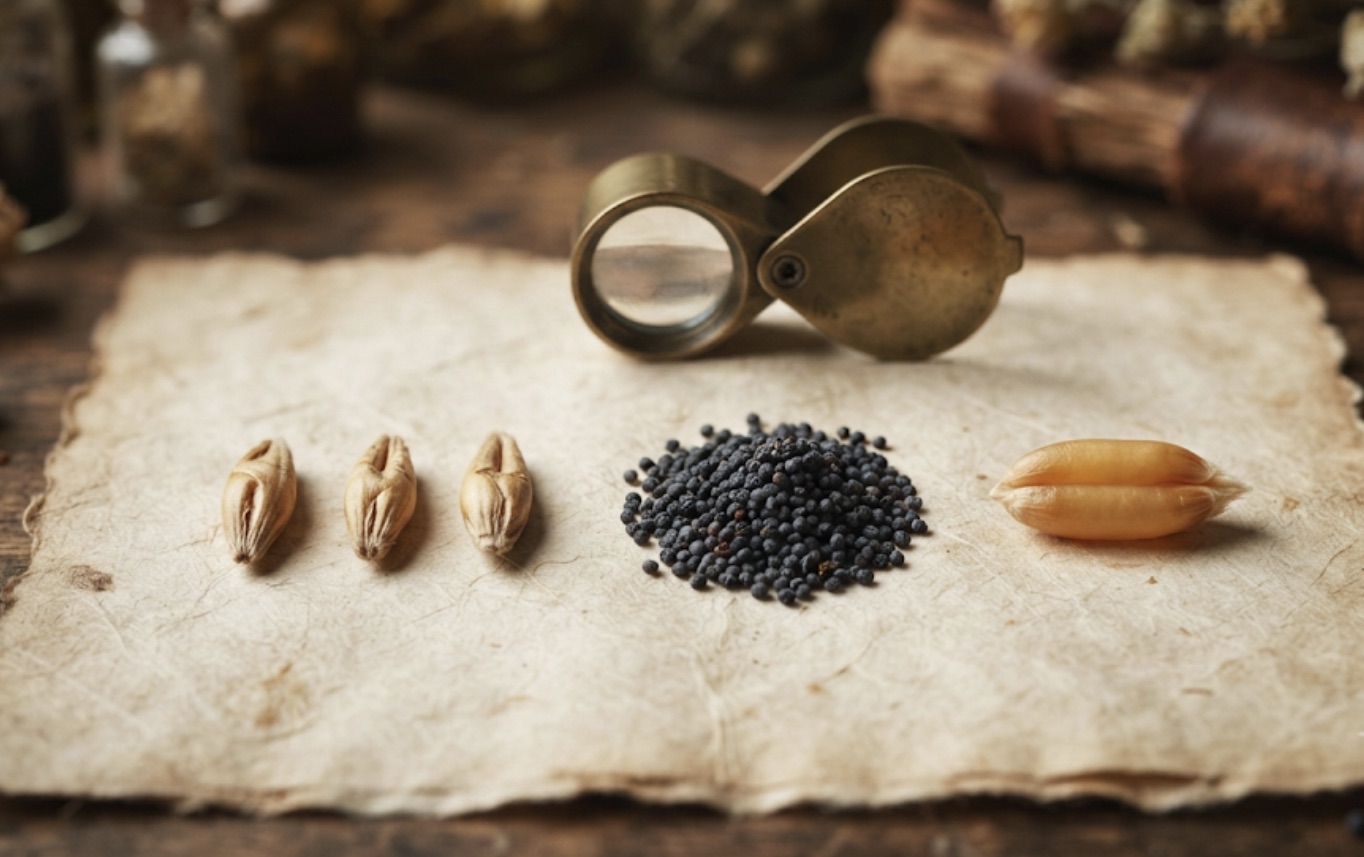
In the 19th century, if you wanted to be taken seriously, you didn't reach for a digital caliper; you reached for a handful of cereal. The Grain of Wheat wasn't just a snack; it was the bedrock of the English legal system. A grain—the smallest unit in the apothecaries' weight system—was literally defined by the weight of a single, dried seed of barley taken from the middle of the ear. It was a charming system, provided your harvest was uniform and you didn't have hungry birds interfering with your legal standards.
The Victorian fascination with tiny natural objects didn't stop at grains. The Poppyseed was frequently employed as a colloquial, if slightly imprecise, unit of measurement for things that were vanishingly small. It speaks to a time when a measurement was something you could hold between your thumb and forefinger—a far cry from our modern reliance on sub-atomic definitions.
The Buzz of Precision
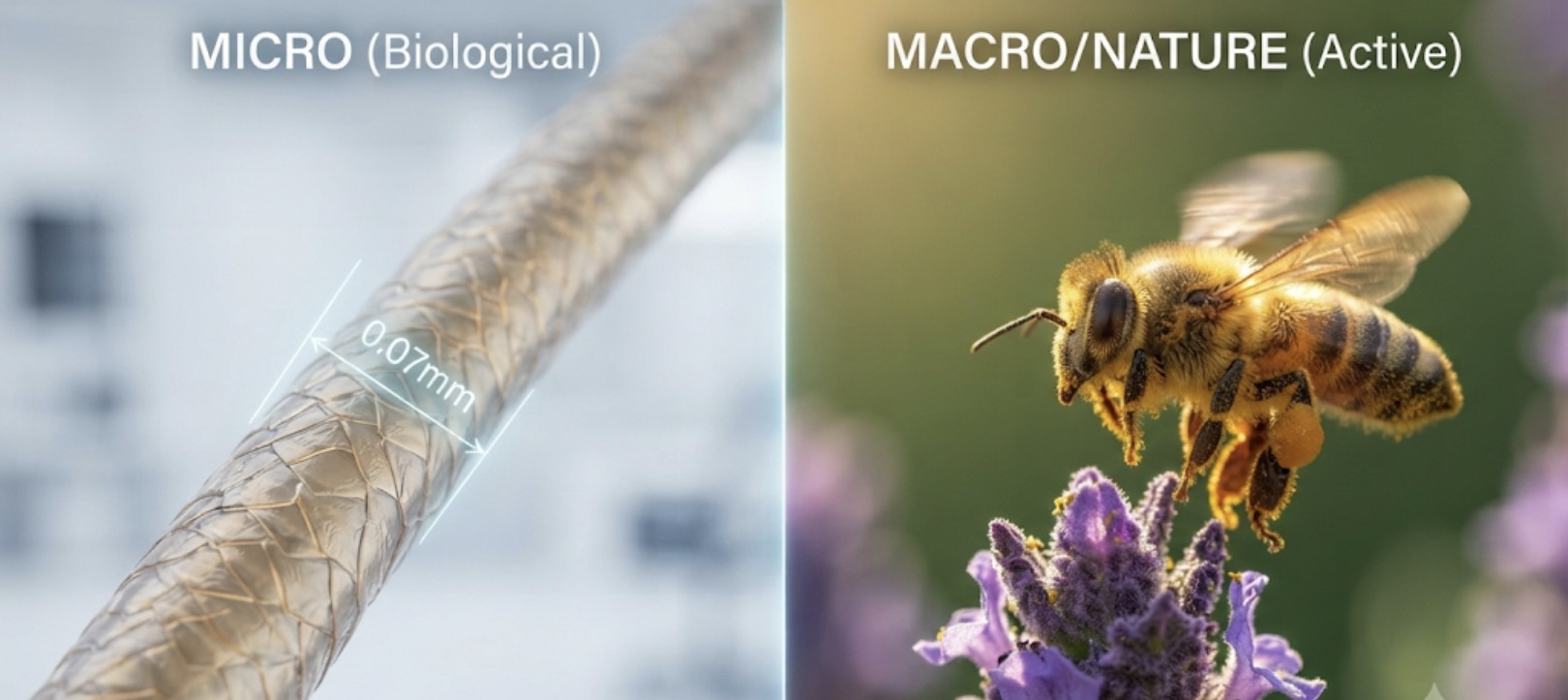
Nature’s role in measurement was rarely just about weight; it was often about behavioural patterns or physical biology. Take, for instance, the Honeybee. While rarely used by the Board of Trade, the honeybee has long served as a poetic, and occasionally practical, reference for the distance a worker might travel or the volume of a hive's product. We love to use the natural world to make sense of our surroundings, perhaps because deep down, we suspect that a standardised metal bar in a vacuum is far less interesting than the chaotic, buzzy reality of a summer meadow.
The Modern Shift: From Hairs to Buses
As we moved from the Victorian age to the age of Silicon Valley, our references shifted from the agricultural to the technological, yet we still haven't managed to stop using nature as our ruler. Today, when we describe the tolerances of a modern processor, we talk about the Human Hair Width. It is our standard, universal yardstick for the microscopic. We have traded the wheat field for the laboratory, but we still measure our progress against the width of our own biological refuse.
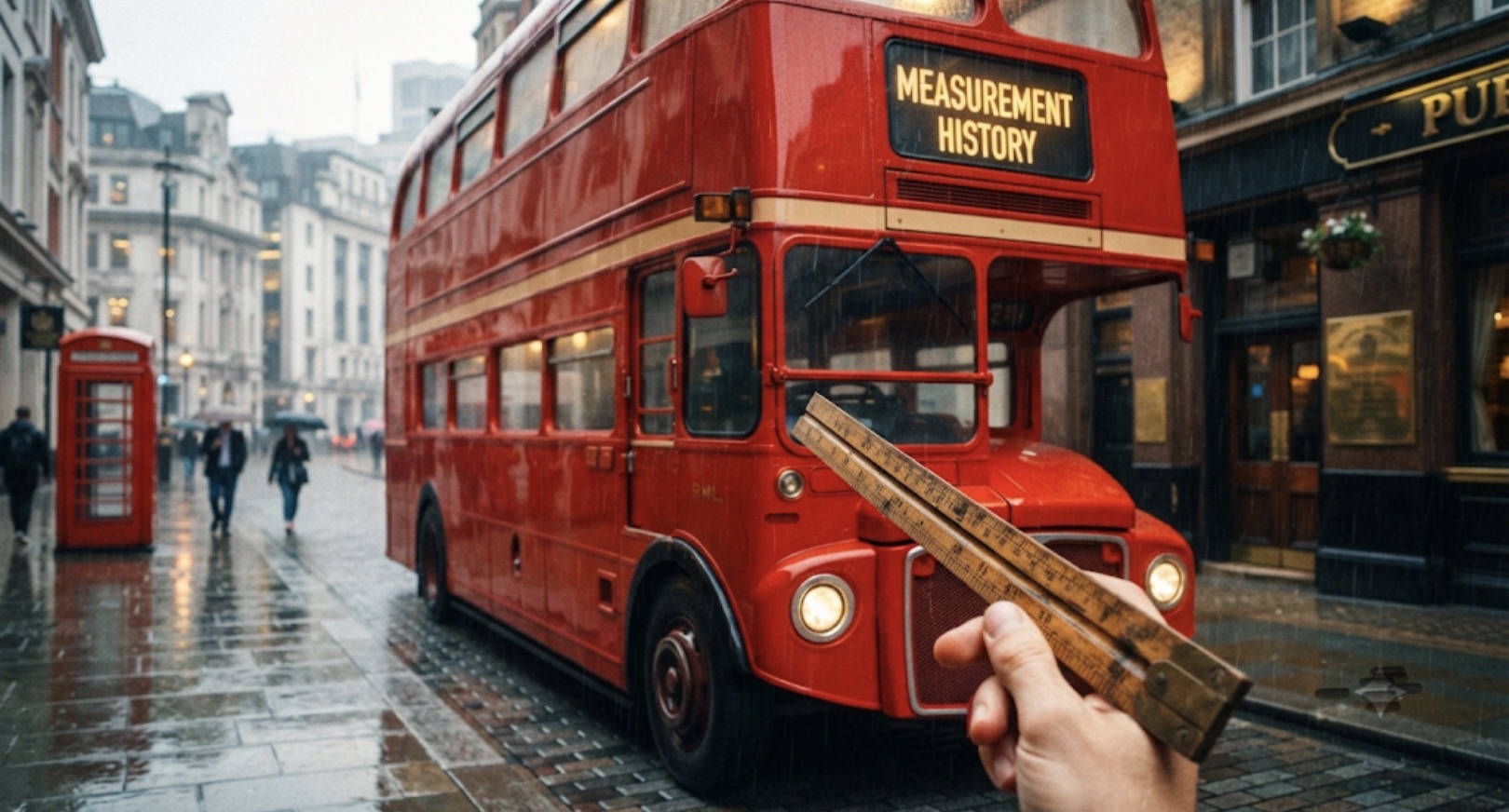
And when the scale flips to the massive? We abandon nature entirely and embrace the peak of British engineering absurdity: the Double-Decker Bus. It is the mandatory unit for any British journalist attempting to explain the size of anything from a deep-sea creature to an asteroid. Whether it’s an ecological disaster or a record-breaking vegetable, if you can’t tell us how many red buses long it is, we simply aren’t interested.
Conclusion: The Metric Muddle
We tend to look back at the Victorian reliance on grains and barleycorns with a polite, superior snicker. Yet, in our modern world, we still find ourselves converting abstract numbers into buses and hair widths because our brains are fundamentally hardwired for the tangible. We are, at heart, still medieval farmers trying to guess the size of the world using whatever happens to be growing—or parked—in the street.