Pounds, Shillings, and Thruppence: The Delightful Chaos of Pre-1971 British Money
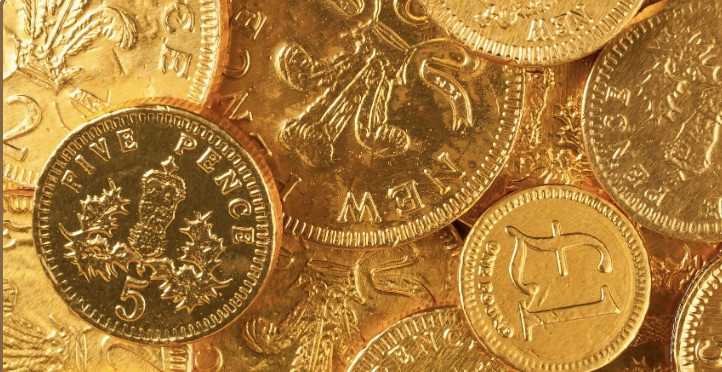
Picture a damp London evening in the late Victorian era, the gas lamps flickering as crowds bustle past horse-drawn omnibuses and street vendors shouting their wares. You duck into a crowded corner shop to settle an overdue account, eager to be free of the heavy, chiming metal burden weighing down your pockets.
You lay out a peculiar mix of strange-sounding denominations: a bright silver florin, a chunky copper penny, and a tiny, multi-sided brass bit that looks more like a token from a parlor game than real legal tender.
If this sounds less like financial commerce and more like a high-fantasy tabletop roleplaying game, welcome to the world of pre-decimal British currency.
Before February 15, 1971—a day known historically as Decimal Day—Britain ran on a monetary system that defied modern logic. It was quirky, fiercely loved, maddeningly complicated, and deeply woven into the fabric of British culture. Let's take a journey back to the days when money had character, weight, and a healthy dose of eccentricity.
The Madness of the Maths: The £sd System
To understand old British money, you have to throw out the number 10. Modern global currency relies on the clean, predictable base-10 decimal system (100 cents to a dollar/euro/pound). Pre-1971 Britain laughed in the face of such simplicity.
Their system was known as £sd (pronounced L-S-D, which has nothing to do with the 1960s counterculture). The letters stood for the historical Latin terms:
- Libra (Pound)
- Solidus (Shilling)
- Denarius (Penny)
The mathematical structure broke down like this:
- 12 Pence = 1 Shilling
- 20 Shillings = 1 Pound
- 240 Pence = 1 Pound
While this sounds like a nightmare for anyone trying to split a dinner bill, it actually had a brilliant practical logic. The number 240 is highly divisible. You can easily divide a pound into halves, thirds, quarters, fifths, sixths, eighths, tenths, twelfths, fifteenths, twentieths, twenty-fourths, thirtieths, fortieths, sixtieths, 80ths, and 120ths.
In an era before pocket calculators, this made wholesale trading and splitting goods incredibly clean. Try dividing a modern 100-penny pound by three, and you are left with a messy 33.333p. In 1950, a third of a pound was exactly 6 shillings and 8 pence.
The Great Coin Menagerie
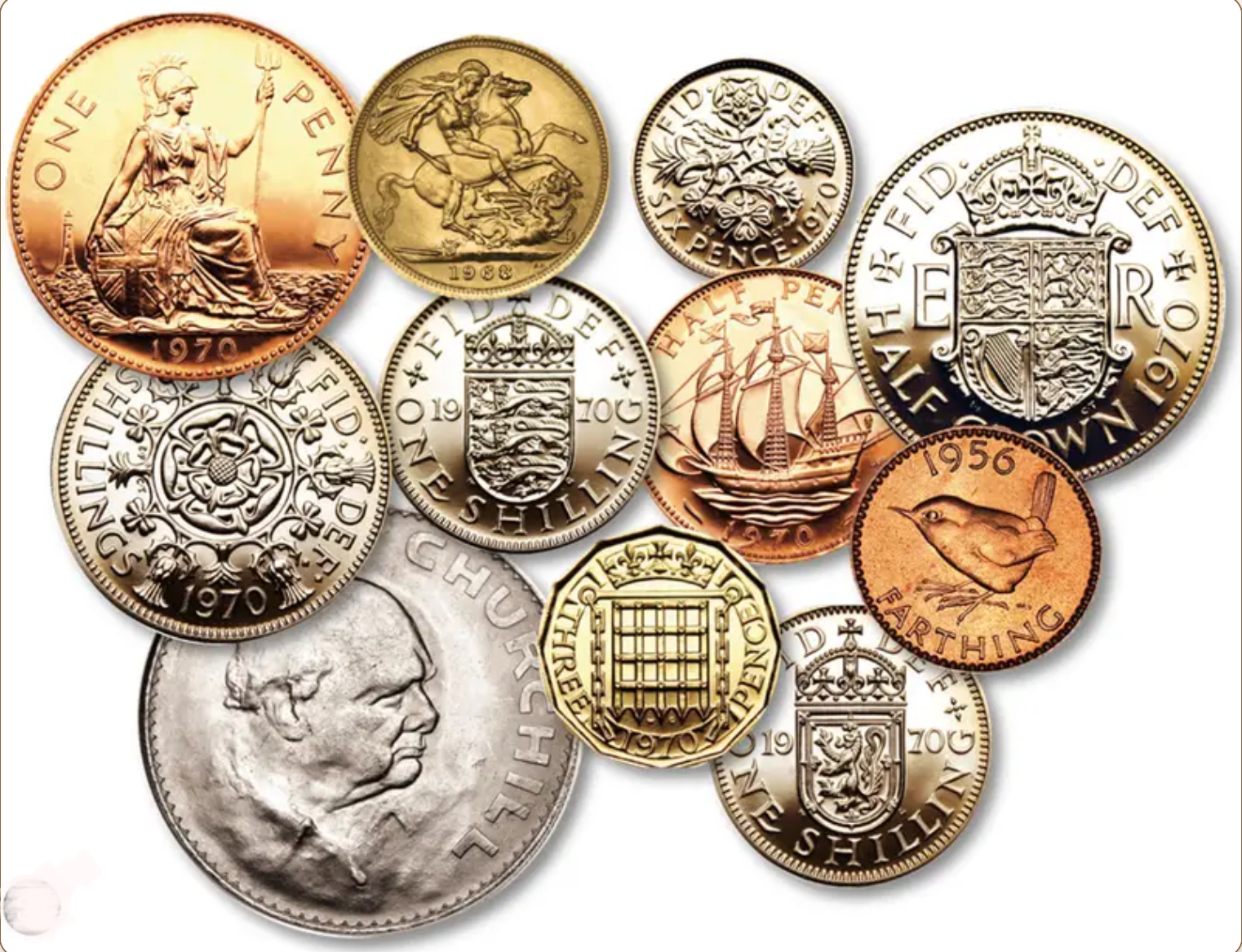
The pre-decimal pocket was a heavy, jingling museum of copper, brass, and silver. Here is the spectacular lineup of currency units that Brits carried around daily:
| Coin Name | Value in Pence | Slang / Nickname | Notes |
|---|---|---|---|
| Farthing | 1/4 d | - | The smallest value coin; featured a tiny wren bird. |
| Halfpenny | 1/2 d | "Ha'penny" | Pronounced "hay-pny." Essential for buying single sweets. |
| Penny | 1 d | Copper | Large, heavy copper coin. The plural was "pence." |
| Threepence | 3 d | "Thruppence" or "Threepenny bit" | Famously minted as a distinct 12-sided brass coin from 1937 onward. |
| Groat | 4 d | - | Mostly phased out of general circulation by the Victorian era, but historically significant. |
| Mechanic Sixpence | 6 d | "Tanner" | A lucky silver coin often baked into Christmas puddings. |
| Shilling | 12 d | "Bob" | The backbone of daily commerce. "A ten-bob note" was half a pound. |
| Florin | 24 d (2s) | "Two-shilling piece" | Introduced as an early, failed experiment in decimalisation. |
| Half-Crown | 30 d (2s 6d) | "Half-a-case" | A hefty, prestigious silver coin. |
| Crown | 60 d (5s) | - | Large commemorative coin, rarely used for casual shopping. |
| Sovereign | 240 d (£1) | "Quid" or "Sovereign" | A magnificent, solid gold coin used in the Victorian era. |
| Guinea | 252 d (£1 1s) | - | A "phantom" aristocratic unit of currency equal to 21 shillings. |
Victorian Anecdotes: True Tales of the Mint
To truly understand how this money lived and breathed, we have to look at the Victorian era, where currency collided with empire, religion, and social class.
1. The Scandal of the "Godless Florin" (1849)
In 1849, the Royal Mint decided to test the waters of the metric system. They introduced the Florin, which was explicitly marked as "One Tenth of a Pound." It was a sleek, beautiful silver coin.
However, the Master of the Mint at the time, Richard Lalor Sheil, was a Roman Catholic—a fact that already drew suspicion from the fiercely Protestant Victorian establishment.
When the coin was released, the public noticed something shocking: the traditional Latin abbreviations D.G. (Dei Gratia / By the Grace of God) and F.D. (Fidei Defensor / Defender of the Faith) had been omitted from Queen Victoria's portrait.
The public went into a frenzy. It was dubbed the "Godless and Graceless Florin." Rumours swirled that Sheil was trying to subtly overthrow the Church of England. The outcry was so severe that the coin was promptly recalled, Sheil stepped down from his post, and the design was changed to include the missing religious text by 1851.
2. The Aristocratic Snobbery of the Guinea
The Guinea coin—so named because it was originally minted using gold brought to Britain from Guinea, West Africa—stopped being physically minted in 1814. Yet, throughout the entire Victorian era, it remained the preferred unit of transaction for upper-class society.
Why? Pure social snobbery.
A pound was worth 20 shillings, but a guinea was worth 21 shillings. Tradesmen, carpenters, and servants were paid in crass, ordinary pounds. However, professionals—such as high-end doctors, barristers, portrait painters, and horse breeders—priced their services strictly in guineas.
When a wealthy Victorian gentleman bought a racehorse for 500 guineas, he would write a cheque for 525 pounds. The extra 500 shillings (25 pounds) was a built-in, gentlemanly gratuity for the professional, allowing the elite to transact high-stakes business without ever touching common "pounds."
3. The Street Sweeper's Farthing Bundle
While aristocrats threw around phantom guineas, the Victorian working poor survived on farthings (a quarter of a penny). In the mid-1800s, inflation was virtually non-existent, and a farthing actually possessed genuine daily purchasing power.
Victorian children could walk into a sweetshop with a single farthing and buy a "farthing bundle"—a small paper cornucopia filled with broken biscuits, stale cake crumbs, and liquorice scraps. Street vendors sold hot potatoes for a halfpenny, and a cup of saloop (a hot herbal drink made from orchid roots) cost a single farthing.
If you lost a shilling down a cobblestone grate in 1880, you hadn't just dropped loose change; you had lost a manual labourer's entire daily wage.
Language That Outlived the Coins
Though the physical coins vanished more than half a century ago, the linguistic ghost of pre-decimal currency still haunts the English language today.
- "Don't care a rap" / "Don't give a toss": A rap was a counterfeit Irish halfpenny common in the 18th century. If you didn't care a rap, you cared about something completely worthless.
- A "Bob": People in the UK still refer to a shilling's worth as a "bob" (e.g., "that cost me a few bob"). The origin is highly debated, but it likely links to the old English verb bob (meaning to strike or cheat), or perhaps a nod to Sir Robert Walpole, the first British Prime Minister.
- A "Tanner": This nickname for a sixpence likely derived from John Sigismund Tanner, a Chief Engraver at the Royal Mint during the 18th century, though some linguists argue it comes from the Romani word tawno, meaning "small thing."
The Death of the Old System
By the mid-20th century, Britain's global trading partners had all gone decimal. Computing was on the horizon, and trying to program an early digital computer to calculate 12 pence to a shilling and 20 shillings to a pound was an engineering nightmare.
On Decimal Day (February 15, 1971), the old world was swept away. The pound was retained, but it was cleanly divided into 100 "New Pence."
For months, elderly citizens carried around cardboard "conversion wheels" to figure out if their shopkeepers were ripping them off. The transition was efficient, logical, and inevitable—but it stripped away a millennium of historical eccentricity.
The next time you pull out a smooth, uniform, decimal coin or tap a plastic card against a contactless reader, spare a thought for the Victorian Londoner, whose pockets jingled with the glorious, heavy, chaotic poetry of farthings, florins, and half-crowns.