The Modern Imperial: How the Victorian Loom Invented the Gigabyte
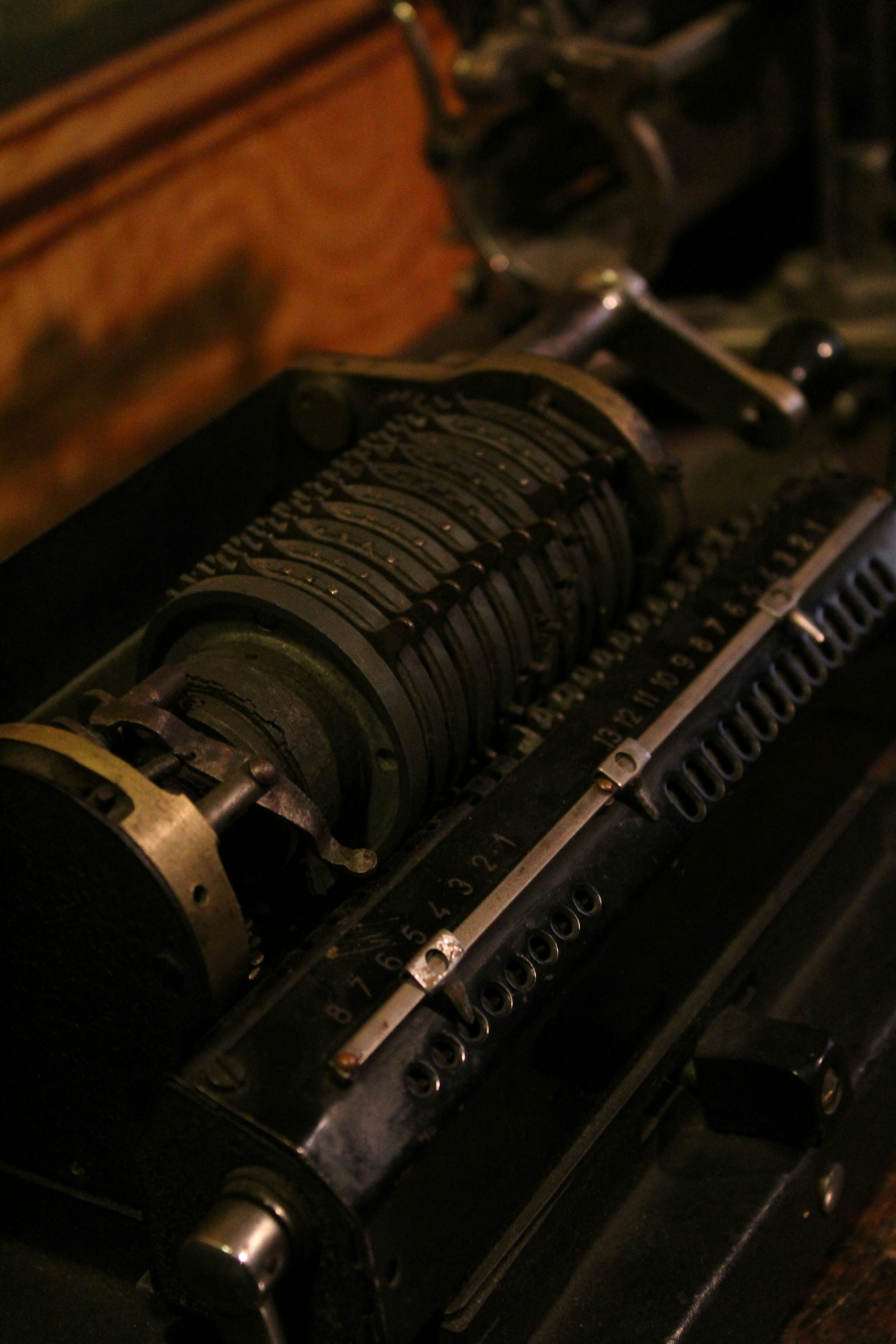
When you purchase a laptop with 512 Gigabytes of storage, you are using a measurement system that feels incredibly futuristic. Yet, the logic behind bits, bytes, and megabytes shares a striking resemblance to the weights and measures of Victorian England. In fact, the very first digital "data storage" wasn't invented in Silicon Valley—it was invented in 19th-century weaving mills.
The Bit: The Ultimate Binary Switch
At its absolute core, all digital data is made of a Bit (a portmanteau of Binary Digit). A bit can only be one of two things: a 1 or a 0. It is a simple yes/no question. This exact logic was used by Victorian engineers. In 1837, Charles Babbage proposed using paper cards with holes punched in them to program his famous mechanical computer, the Analytical Engine. If there was a hole, the machine's mechanical gears moved (a 1); if there was no hole, they didn't (a 0). Your modern smartphone operates on the exact same logic as a Victorian loom.
The Byte: A Mathematical "Mouthful"
In 1956, an IBM engineer named Werner Buchholz coined the word Byte. He deliberately changed the spelling from "bite" so engineers wouldn't accidentally confuse it with "bit." Eventually, the industry standardised a Byte to mean 8 bits working together. Think of a Byte as the modern equivalent of a Pound; a single byte is just enough data to store a single letter of the alphabet, like the letter "A".
The Multipliers: Kilobytes, Megabytes, Gigabytes and Terabytes
As data grew, computer scientists adopted Greek prefixes to bundle bytes together, mimicking the way the British Empire bundled pounds into hundredweights and tons:
- Kilobyte (KB): Roughly 1,000 bytes. This is equivalent to a single page of text in a Victorian diary.
- Megabyte (MB): Roughly 1 million bytes. This is enough to store a medium-sized Victorian novel, like Charles Dickens' Oliver Twist.
- Gigabyte (GB): Roughly 1 billion bytes. If you filled an entire room with physical, leather-bound encyclopedias, you would have about one Gigabyte of information.
- Terabyte (TB): Roughly 1 trillion bytes. This vast capacity could store the entire collection of the British Library’s digitised historical newspapers, preserving centuries of history in a single, compact device.
Victorian Fun Fact: If you wanted to match the capacity of a modern 2 Terabyte (TB) external hard drive using the physical punch cards from early computing history, you would need 28 billion cards. Stacked on top of each other, those cards would reach all the way to the moon and back!
We tend to view computer data as something ethereal and completely new. But from the binary punch cards of the 1800s to the gigabytes of today, data is simply a continuation of humanity's obsession with weighing, measuring, and categorising the world around us.