The Riddle of Gold and Feathers: When a Pound Isn't a Pound
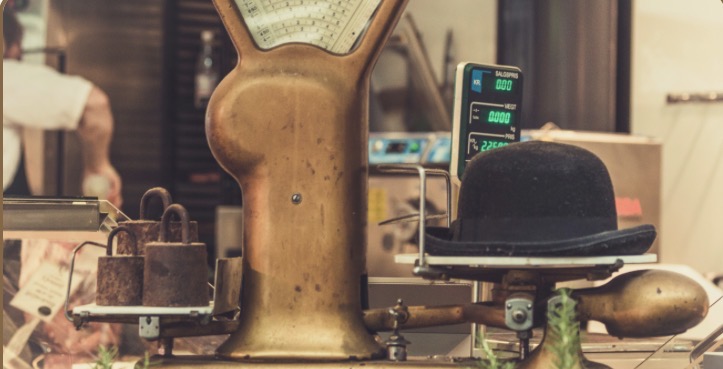
Imagine stepping onto a bustling Victorian high street in 1850. You pop into a butcher's shop to buy a pound of beef, stroll over to a jeweller to buy a troy ounce of silver for a pocket watch, and finish your morning at the apothecary, picking up a dram of liquid laudanum for a nagging toothache.
You have just interacted with three completely different universes of weight—and if you tried to use the butcher's scale to weigh your medicine or your silver, you'd end up either bankrupt, poisoned, or in jail. Welcome to the chaotic, brilliant, and deeply confusing world of the three Imperial scale systems: Avoirdupois, Troy, and Apothecaries.
Avoirdupois: The Everyday Heavyweight
Let's start with the one you actually know. If you buy a sack of potatoes in a British market today, or check your weight on a vintage set of bathroom scales, you are using the Avoirdupois system. The name sounds posh, but it's a clunky Anglo-Norman French phrase (aveir de peis) that literally translates to "goods of weight."
By the time the Victorians locked it into law with the 1824 Weights and Measures Act, it was the definitive way to weigh everyday items: wool, sugar, coal, flour, and meat. The maths of the high street was simple: 16 ounces made 1 pound. For a grocer, 16 was a dream—you could repeatedly split a block of butter in half, then into quarters, then eighths, using nothing but a knife and mental arithmetic.
Troy Weight: The Language of Billionaires
But what if you weren't selling stinky cheese or lumps of coal? What if you were trading in pure gold, shimmering silver, or priceless emeralds? For that, the rough-and-ready Avoirdupois system was considered far too clumsy. Enter Troy Weight.
Named after the French trading town of Troyes, this system was strictly reserved for precious metals and gemstones. Because a single misplaced speck of gold could ruin a merchant, the Troy system didn't muck about with big, bulky numbers. Instead of 16 ounces to a pound, the Troy system decreed that 12 ounces made 1 Troy Pound. To a Victorian gentleman looking to melt down family silver, this meant a Troy pound was actually lighter than an everyday grocery pound.
The Apothecaries: A Matter of Life and Death
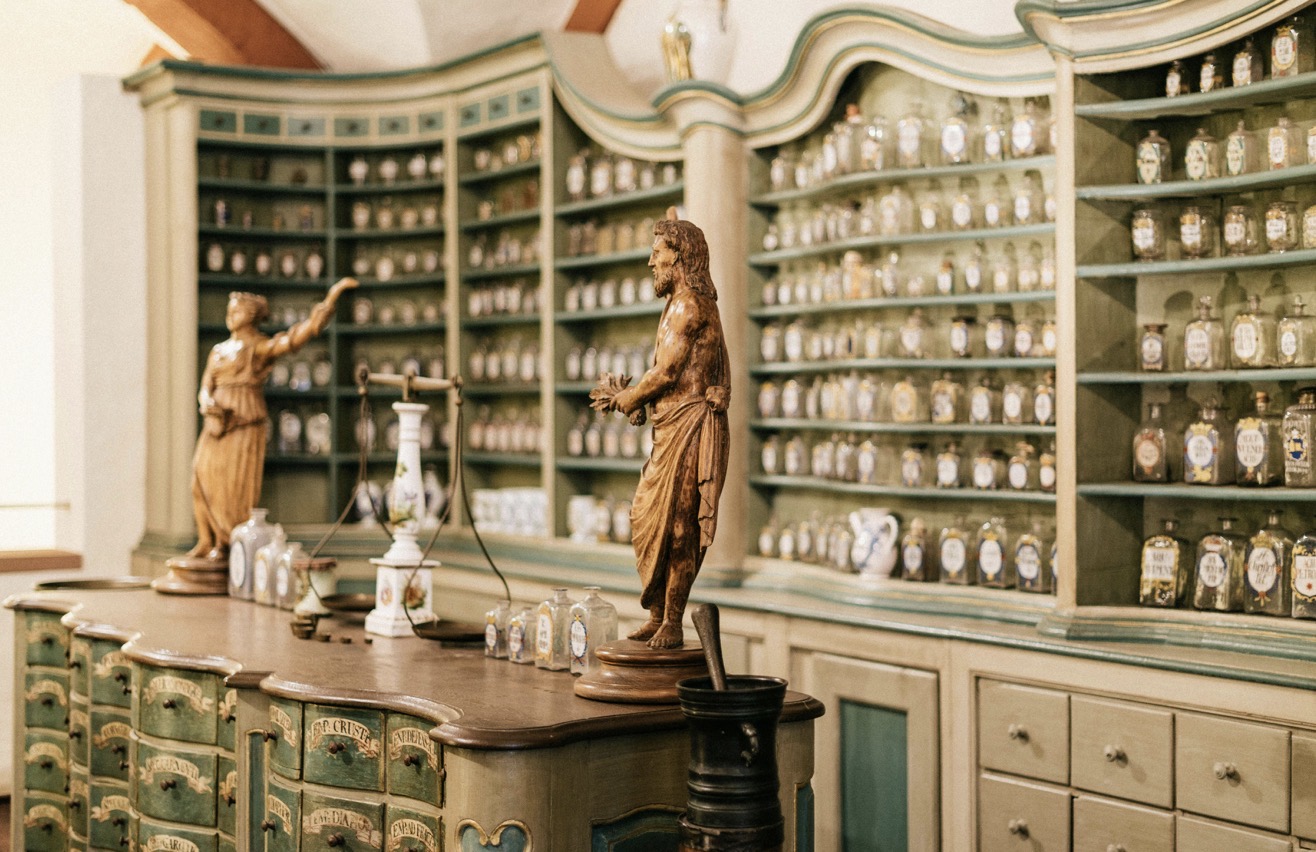
The apothecary's shop was a wonderland of mysterious brown bottles and toxic chemicals like arsenic, mercury, and opium. Precision here wasn't about protecting your wallet; it was about keeping your heart beating. To ensure doctors didn't mix up their medical recipes with butcher's orders, they used their own exclusive system.
The Apothecaries adopted the same pound and ounce as the Troy system, but broke them down into smaller, specialised medical doses with wonderfully archaic names:
- The Grain: The smallest baseline, the weight of a single seed of barley.
- The Scruple: Equal to 20 grains (used for potent powders).
- The Dram: Equal to 3 scruples (or 60 grains).
- The Ounce: Equal to 8 drams.
- The Pound: Equal to 12 ounces.
The Grand Mathematical Riddle
This brings us to the ultimate puzzle of the Victorian marketplace: "Which weighs more: A pound of gold, or a pound of feathers?" Naturally, your brain assumes it's a trick and says they weigh the same. But in the Victorian era, the answer was a resounding "The feathers weigh more!"
Feathers are weighed in Avoirdupois (grocery) pounds, while gold is weighed in Troy pounds. A standard Avoirdupois pound equals 7,000 grains, while a Troy pound is only 5,760 grains. Conversely, when looking at individual ounces, the Troy ounce wins (480 grains vs. 437.5 grains for an Avoirdupois ounce).
The Modern Survivor
When the metric system took over, the Apothecaries system was the first to go, banned in 1971 to prevent medical errors. The Avoirdupois system remains a cultural powerhouse in British baking and American supermarkets. But the Troy ounce? It flatly refused to die. Global financial markets still trade gold, silver, and platinum internationally by the exact same Troy ounce used in the medieval markets of France.